Beyond Sharper Images: How LLM-Guided Super-Resolution Transforms Geo-Spatial Analysis

The development of generic image enhancement to intelligent, task-sensitive processing of satellite imagery is a major change in the methodology of geo-spatial analysis. Satellite images with high resolution form a core of data in modern urban planning, precision agriculture, as well as disaster resiliency schemes. However, even with all the cumulative developments in super-resolution (SR)…


The Next Frontier in NLP: Smarter Agents, Not Just Bigger Models

Introduction: Beyond the Limits of Supervised Learning Imagine a world where AI not only mimics human summaries but also exceeds them in quality. For years, Natural Language Processing (NLP) has relied on Supervised Fine-Tuning (SFT) to train language models to replicate human-written summaries. While this method works, it has flaws and treats all errors the…

The AI Stack We Trust: Tools, Frameworks, and Practices We Use in Production

In the fast-paced world of artificial intelligence, building and maintaining an AI stack is no easy task. Decisions being made today affect the ability to innovate, scale, and provide trustworthy AI-based products directly. We are like any competent workman and rely on reliable tools. This paper focuses on the AI stack used in production that…

Inside the Engine: Building a Real AI Solution from Prototype to Production

Artificial Intelligence (AI) is transforming industries, from healthcare diagnostics to financial forecasting and analysis. This article explores the journey of developing a generic AI solution to solve real-world problems, aligning with the latest AI trends, standards, and best practices. We’ll cover technical challenges, architectural decisions, and actionable insights. The Process Flow Vision to Prototype: Laying…

Best AI Tools for QA Automation & Test Case Generation in 2025: A Complete Guide

AI in 2025: What QA Teams Need to Know Modern software delivery infrastructure is increasingly reliant on AI-powered QA technologies. Whether your team relies primarily on manual testing, automation-dependent, or somewhere in between, these technologies can shorten release cycles, increase coverage, and speed up test creation by up to 70%. In this article, we analyze manual-only and hybrid AI…

Which AI Coding Assistant Leads the Pack in 2025?

Introduction AI is reshaping the way developers write, test, and understand code. Whether you are refactoring an old codebase or building new features from scratch, there’s a growing list of AI tools ready to help. But with so many options such as GitHub Copilot, Cursor, Cody, Aider, and Windsurf, how do you choose the right…

Agentic AI-Driven Insights: The New Frontier of Summary Evaluation

Introduction: Achieving Accurate Summarization Imagine your AI assistant confidently summarizing a 50-page clinical trial report, but including a fabricated statistic that could influence a million-dollar drug approval decision. How would you know? AI Summary Using a Typical Setup Typical AI Agent Generating Summary Traditional metrics like ROUGE focus on word overlap but fail to answer…

GPT4 Turbo vs. GPT 4o: Which New Model Is King?

The pace of change in the AI world is staggering, so much so that it’s not always easy to keep up. That’s why we’ve put together this brief guide on the differences between the two newest (as of July 2024) additions to OpenAI’s GPT family: GPT4 Turbo and GPT4o (Omni). Let’s examine what makes each…

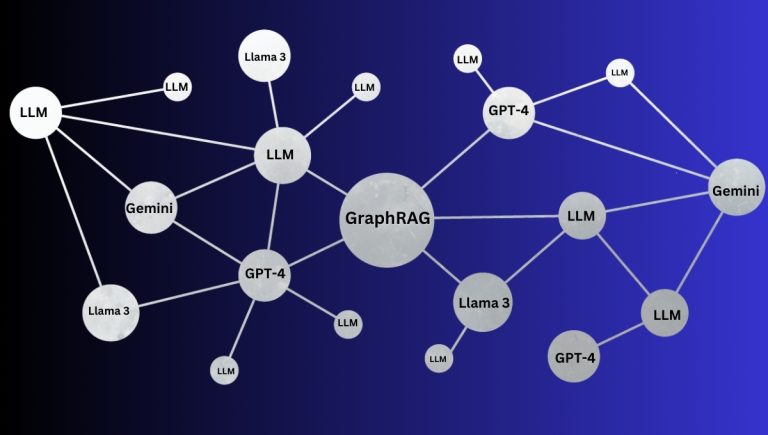
What is GraphRAG? Is it Better than RAG?

Graph Retrieval-Augmented Generation (GraphRAG) is an advanced approach in natural language processing (NLP) that combines the strengths of graph-based knowledge retrieval with large language models (LLMs) such as GPT-4, Llama 3, and Gemini. The core idea behind GraphRAG is to improve the generation of coherent and contextually relevant text while reducing AI hallucinations by leveraging structured…

The Battle of the LLMs: Llama 3 vs. GPT-4 vs. Gemini

We’ve come a long way since GPT initially took the world by storm. These days, many organizations routinely incorporate large language models (LLMs) into their daily processes to improve productivity, and there are now around 40 LLMs in use worldwide.  Users can even vote for their favorite bots using this tool. But in this rapidly evolving landscape, three models…